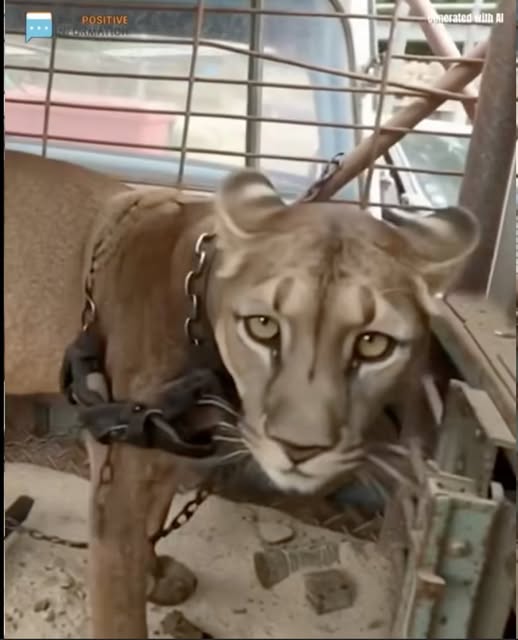
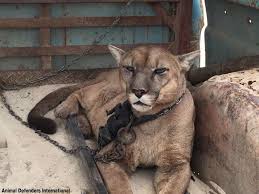
For more than 20 years, a mountain lion named Mufasa endured a life of captivity that no wild animal should face. Chained to the back of a truck, he was forced to travel across villages in Peru as part of an illegal circus.
Mufasa’s story is one of suffering and survival—but also of rescue and hope. His case eventually became a powerful symbol in the fight against animal cruelty in circuses and the illegal exotic pet trade.
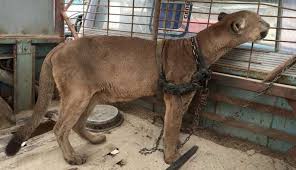
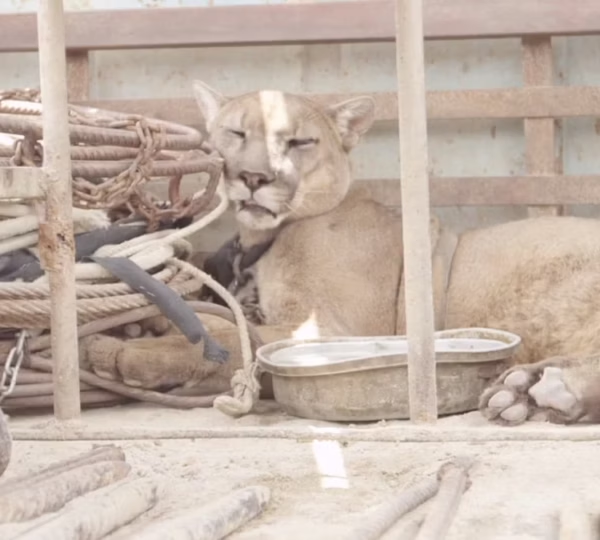
His name likely came from the noble lion in the movie The Lion King, though the reality of his life was far from heroic. Instead of roaming free, Mufasa spent most of his days tied among circus equipment with little space to move.
Rescuers believe he was taken from the wild as a cub and sold through the illegal wildlife trade before ending up with a traveling circus that moved between small towns across Peru.
For years, Mufasa never experienced anything close to a natural environment. There were no forests, grasslands, or quiet spaces—only the constant noise of transport and the weight of the chains that kept him tethered to a truck bed.
His rescue finally came when the organization Animal Defenders International (ADI) launched a mission to shut down illegal circuses after Peru banned the use of wild animals in performances in 2011.
During a large operation called Spirit of Freedom, ADI teams tracked down traveling circuses across the country. In total, they helped rescue dozens of animals, including lions, bears, monkeys, and other exotic species kept in cruel conditions.
Finding Mufasa was not easy. When rescuers located the circus, they faced resistance from the owners, leading to an eight-hour standoff before authorities could finally free the animal.
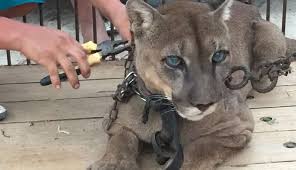
When his chains were cut away, Mufasa stretched his body in ways he had likely never been able to before. Photos of that moment quickly spread across the world, showing the emotional impact of his long-delayed freedom.
Veterinarians soon discovered that Mufasa was severely underweight and malnourished. Beyond the physical damage, he was extremely nervous around people—a sign of the psychological trauma caused by decades of captivity.
He was taken to a rescue center near Lima, where specialists began carefully rehabilitating him. With proper nutrition, veterinary care, and patient attention, his health slowly improved.
Eventually, Mufasa was moved to the Taricaya Ecological Reserve, a protected area designed to rehabilitate rescued wildlife.
Although he could never be fully released into the wild—having spent most of his life in captivity—he was finally given a large natural enclosure where he could explore safely.
When Mufasa stepped into the forest environment for the first time, witnesses described the moment as deeply emotional. He slowly walked through grass and under trees, experiencing sights and sensations he had been denied for decades.
His journey became a powerful reminder of both the cruelty animals can face and the change that dedicated rescue efforts can bring.
Today, Mufasa’s story continues to inspire animal advocates around the world. His rescue helped bring attention to illegal wildlife trade and strengthened the movement to end the use of wild animals in circuses.
Although he lost much of his life to captivity, his final years were spent in peace—walking freely beneath the trees instead of living in chains.